Arriving in an Italian city alone on a Friday evening takes a small amount of nerve. The station is loud, the bus map makes no sense yet, and everyone else seems to know exactly where they are going. By Saturday morning the same streets feel like yours. Two days is enough to make that switch — provided the trip is built for a beginner and not for a highlight reel.
What follows assumes you have never done this before. Modest distances, one bag you can carry yourself, bookings you can finish in an evening, and enough empty space in the schedule to sit down with a coffee and watch a piazza do its thing.
Choose a route two days can hold
The usual beginner mistake is ambition. Rome, Florence and Venice in one weekend is not a holiday; it is a train timetable with luggage. Pick one city as your base and, at most, one short day trip. Or pair two small cities thirty to forty-five minutes apart on the same line — Bologna and Ferrara, Florence and Lucca, Padua and Vicenza, Rome and Orvieto — so moving between them costs less than an hour and almost no planning.
Keep every leg under three hours, and put the longest journey first, while you still have daylight and patience. Arriving somewhere unfamiliar after dark with a bag and no sense of the streets is the part of solo travel that most reliably goes wrong. A late train is fine when you already know the way to your door. It is a poor moment to be working it out.
Then decide where to sleep: a few minutes from the station, or in the historic centre. The first buys you an easy walk with luggage; the second buys you an evening where dinner is a five-minute stroll. Both are sensible. What rarely works is a cheap room in an outer suburb served by one bus an hour — you save a little and spend your weekend commuting.
Pack one bag you can carry up stairs
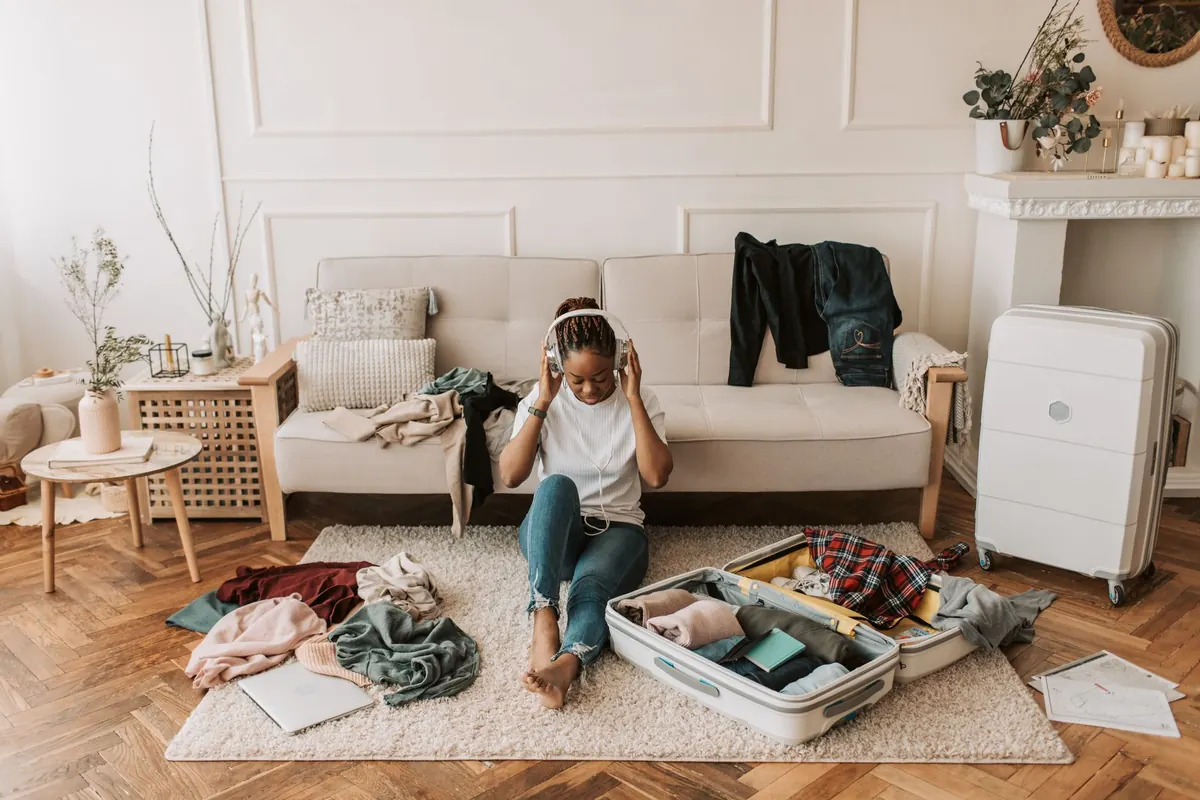
Historic Italian centres are cobblestones, narrow pavements and staircases, and many small guesthouses have no lift. Whatever you bring, you will carry it up at least one flight. Build the bag around that fact.
- A 30–40 litre backpack or small cabin trolley, not both.
- Two bottoms, three tops, one warm layer — enough for two days, not for every possible weather.
- Comfortable shoes worn on the train, plus one lighter pair at most.
- Toiletries decanted into small bottles, and a plug adapter for Italian sockets.
- A power bank, a charging cable, and a paper copy of your booking confirmations.
- A photograph of your passport or ID saved somewhere you can reach offline.
Two days does not need laundry planning. Take one warm layer even in summer, because stone churches and evening squares are colder than they look, and leave the laptop at home. If you cannot lift your bag over your head at your own front door, it is too heavy for a weekend.
Book trains and beds in one sitting
Trains
Buy from the operator's own app or website rather than a resale site, so changes and refunds stay simple. Regionale trains stop everywhere, come without seat reservations, and are the backbone of short hops between neighbouring towns. High-speed trains have assigned seats and fares that tend to climb as the date gets closer, so book those as soon as your dates are firm.
If you buy a paper regionale ticket, validate it in the machine on the platform before boarding. If your ticket is digital, read the confirmation carefully, because check-in rules vary by ticket type. Screenshot everything once — station wi-fi is not a plan.
Beds
Small B&Bs and guesthouses often keep an afternoon check-in window and no reception after it. Message the host with your rough arrival time and ask how to get in if you are delayed. A private room in a hostel or a one-room B&B is often the easiest choice for a solo traveller: usually cheaper than a hotel single, and you still close your own door at night. If your plans are still wobbling, pay a little more for free cancellation.
Stay safe without turning cautious into anxious
Most solo weekends pass without incident, and the risks that matter are ordinary ones: a bag left open on a platform, an unlit street at midnight, a phone waved about on a crowded bus. A few habits cover nearly all of it.
- Split cash and cards between two places, so a lost wallet is an inconvenience rather than the end of the trip.
- Tell one person at home where you are sleeping each night.
- Keep your bag in front of you in large stations, where pickpockets work the crowds around ticket machines and departure boards.
- Walk as though you know where you are going, even while you are checking the map on a doorstep rather than in the middle of the pavement.
- Trust your reaction to a person or a street. Leaving is always allowed, and it never needs an explanation.
Before you go, save your insurer's emergency number and your embassy's contact details in your phone. For anything involving health, money or legal questions, read your own policy or ask a professional rather than relying on a forum thread.
Eat well on your own
A table for one is normal in Italy, particularly at lunch. Ask for un tavolo per uno and you will be seated without ceremony. Lunch menus tend to be simpler and cheaper than dinner, which makes midday the low-pressure moment to try the trattoria you noticed; evenings can be a slice of pizza on a wall, or an aperitivo around seven with one drink and a small spread of snacks at the counter.
Two practical notes. A coperto — a small per-person cover charge — is standard in sit-down restaurants and is not a trick. And a restaurant with photographs of the food and someone waving you in beside a monument is rarely the best use of your money; walk two streets back and look for a menu in Italian.
Bring a book or a notebook. It makes the first ten minutes at the table easier, and after that you probably will not open it.
A sample weekend that works
Bologna and Ferrara, in early autumn, is a realistic first solo trip: two cities, one short train, nothing rushed.
- Friday evening. Arrive in Bologna, check in near the station, eat somewhere within ten minutes of your room, sleep early.
- Saturday morning. Walk the porticoes to Piazza Maggiore, take a coffee standing at a bar counter, wander the Quadrilatero market, then a long lunch.
- Saturday afternoon. One thing only: a church, a museum, or the portico walk up toward San Luca, which is longer and steeper than it looks.
- Sunday morning. A half-hour regionale to Ferrara, bag left at the station, then the castle, the cathedral and a slow loop of the old streets.
- Sunday evening. Train back, a final gelato, and home on the last reasonable connection.
The plan is deliberately under-filled. One anchor per half-day leaves room for the thing you only find out about once you are there — a market, a festival, a square you keep returning to.
Before you go: a five-minute checklist
- Tickets screenshotted, and your host has confirmed the check-in time.
- Bag lifted over your head once at home, to prove the point.
- A small amount of cash for bars, markets and the occasional bus that prefers it.
- Phone charged, power bank packed, adapter in the bag.
- Someone at home knows your route and your first night's address.
Then go. A first solo weekend mostly teaches you how little you actually need: one bag, two days, and a city willing to be walked.
Photo: A_possitive_guy / Pixabay